Frequently Asked Questions Answered By Specialist Private Client Solicitors

At Spall Clark, our solicitors specialise exclusively in private client law. Our specialist private client solicitors have answered some of the most common questions we receive about wills, probate, and lasting powers of attorney.

If you cannot find the answer you are looking for, please contact our team for tailored legal advice.

Paul Clark, Managing Director of Spall Clark Solicitors
Paul Clark TEP
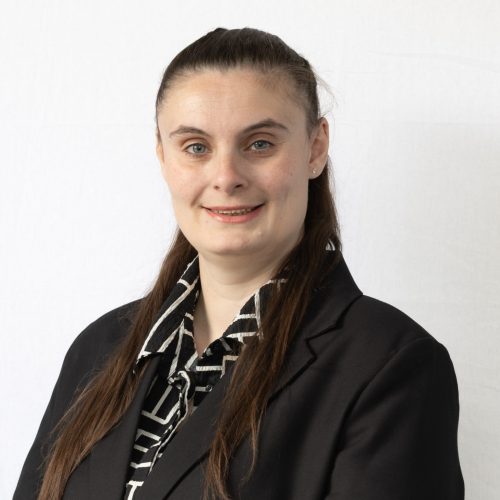
Photo of Melissa Howman
Melissa Howman
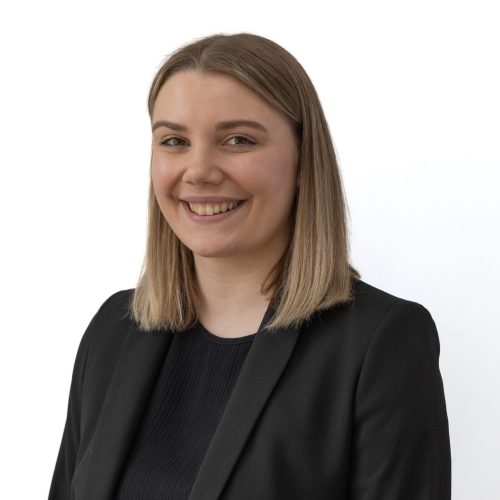
Natasha Yelland, Solicitor at Spall Clark Solicitors
Natasha Yelland
Court of Protection Solicitor Simon Heapy wearing a multi-coloured spotted shirt.
Simon Heapy

Frequently Asked Questions

Working with Spall Clark FAQs

We specialise exclusively in private client law also known as private wealth law. The areas we cover include:

  • Wills
  • Probate
  • Lasting Powers of Attorney
  • Trusts
  • Succession Planning
  • Inheritance Tax Planning
  • Court of Protection

Yes. We regularly advise clients throughout England and Wales as well as clients abroad (for example non-domiciled and non-resident clients with assets in the UK).

Yes. We frequently collaborate with accountants, financial advisers and other professional advisers including solicitors to deliver joined-up advice.

We offer fixed fees wherever possible and we will always explain the cost before we begin work.

We pride ourselves on providing practical, jargon-free advice in plain English.

There is no dress code and you can wear whatever you feel most comfortable wearing. We usually wear business attire although we will dress for the occasion. For example, if we are meeting you at work and your dress code is jeans and t-shirt, we will dress accordingly.

We also understand that meeting a solicitor can be intimidating and this is especially true for people with learning disabilities. Therefore, in some circumstances, we avoid wearing suits in order to tone down the formality of the meeting as we have found that this can help establish a relationship.

The answer depends on the legal service you require. However, you will usually require the following:

  • Identification: Photo ID and proof of address
  • National Insurance Number
  • Your contact details (telephone numbers and email addresses)
  • Contact details for anybody that you would like your solicitor to contact
  • A list of any questions that you would like to ask (writing it down helps)

Listed below if additional information that will be required for services offered by Spall Clark Solicitors. The list is intended to be a guide and additional information may be required.

Wills

  • Details of family members (names, addresses and dates of birth)
  • Details of your finances including approximate values (your financial adviser can provide you with the appropriate details)
  • Thoughts about what you would like to happen when you die
  • Your existing Wills (if available)

Lasting Powers of Attorney

  • Details of family members or friends that you wish to appoint as your attorney (names, addresses and dates of birth)
  • Details of your finances including approximate values (your financial adviser can provide you with the appropriate details)
  • Any wishes you have about what should happen if you can no longer make decisions yourself. For example, if you should receive life sustaining treatment or who should manage your money for you.
  • Your existing Powers of Attorney (if available)

Estate Administration / Probate

  • Death certificate for the person who has died and their spouse (if they died before them)
  • List of assets and liabilities including the approximate values
  • Property deeds (if available)
  • Last known Will (if available)
  • Names and addresses of people named in the Will

Simply contact our team to arrange an initial discussion about your circumstances and objectives.

Lasting Powers of Attorney FAQs

A Lasting Power of Attorney (LPA) is a legal document allowing someone you trust to make decisions on your behalf if you are unable to do so.

There are:

Property and Financial Affairs LPA

Allows decisions about finances and property.

Health and Welfare LPA

Allows decisions about health, care and medical treatment.

The best time is now while you are in good health and have mental capacity. If you have been diagnosed with a condition that may affect your health long term or affect your mental capacity (such as dementia), it is best to act immediately. Waiting until it is needed may be too late.

Yes. Creating an LPA does not remove your ability to make your own decisions.

Your family may need to apply to the Court of Protection for a Deputyship Order, which can be considerably more expensive and time-consuming compared to making Lasting Powers of Attorney.

Yes, provided you still have the mental capacity required to do so.

Probate FAQs

Probate is name given to the process of proving the final Will or who is entitled to inherit when there is no Will (Intestacy). It is also used to mean the process of dealing with a person’s estate after they die. This may include gathering assets, paying debts and distributing the estate to beneficiaries.

No. Some estates can be administered without a Grant of Probate. Whether probate is required depends on the assets involved and how they are owned.

Every estate is different. Simple estates may be completed within six months, while complex estates involving property, business interests or tax issues can take significantly longer.

Executors are responsible for dealing with an estate from start to finish and their role includes:

  • Identifying assets
  • Paying debts
  • Reporting taxes
  • Distributing inheritances
  • Keeping accurate records

Yes. Executors have legal responsibilities and can sometimes become personally liable if mistakes are made during the administration process.

The estate will usually be distributed under the intestacy rules, which determine who inherits.

Debts are paid from the estate before beneficiaries receive their inheritance.

Many people seek professional advice where:

  • The estate is taxable
  • There are disputes
  • Trusts are involved
  • Property requires selling
  • There are assets abroad
  • The administration appears complex
  • They do not have time to deal with the paperwork
  • They wish to focus on grieving

Wills FAQs

You do not have to use a solicitor to make a will. However, professional advice can help ensure your wishes are carried out correctly and reduce the risk of mistakes, uncertainty or disputes after your death.

Using a solicitor is particularly important if you own property, have children, have a blended family, own a business or have significant assets.

If you die without a valid will, your estate will be distributed according to the intestacy rules. These rules determine who inherits and in what proportions.

This may not reflect your wishes and can create difficulties for unmarried partners, stepchildren and other loved ones you intended to benefit.

We recommend reviewing your will every three years and whenever a significant life event occurs, such as:

  • Marriage
  • Divorce
  • Birth of children or grandchildren
  • Purchasing property
  • Receiving an inheritance
  • Starting or selling a business

Yes. You are free to decide who inherits your estate and in what proportions. However, it is possible for disappointed family members to be able to make a claim under the Inheritance (Provision for Family and Dependents) Act 1975. Consideration of potential claims when making Wills can help reduce the risk of disputes after your death.

Yes, although doing so can sometimes lead to claims against your estate. Taking legal advice when reviewing your Will can help reduce the risk of a successful challenge.

Blended families often face unique challenges. A carefully drafted will can help balance the interests of spouses, children, stepchildren and future generations.

It is possible to have one Will to cover overseas assets but in many cases it is better to have a Will in each jurisdiction. If you own assets in different countries or jurisdictions, it is important to take advice as to which law applies to those assets. It can be affected by domicile, residence, nationality and habitual residence. Different rules can apply to overseas property, investments and business interests.

Choosing a Solicitor FAQs

Three of the most important factors when choosing a solicitor are expertise, service and value for money.

Expertise

It is important to choose a solicitor that is a specialist in their area as they will be aware of all the nuances. In addition to being a specialist, there are additional qualifications and memberships that set some solicitors apart from others.

STEP is the leading worldwide organisation for solicitors working in this area of law. They have different levels of membership and the highest level allow members to use the letters ‘TEP’ after their name. For a solicitor to call themselves a TEP they must first prove to the board of STEP that they have sufficient expertise and experience. This often involves completing a two year diploma and meeting the minimum requirement of years of experience. This is in addition to any qualifications as a solicitor. TEPs are considered to be the foremost experts in this area of law. Spall Clark has one full member of STEP (Paul Clark TEP), one Associate Member of STEP (Natasha Yelland) and one Affiliate Member of STEP (Melissa Howman).

The Association of Lifetime Lawyers (formerly known as Solicitors for the Elderly) is an independent, national organisation of lawyers from across the UK who provide specialist legal advice for people planning for the future. They provide external accreditation for their members to prove they understand the key issues that can affect vulnerable and older people such as dementia and Parkinson’s Disease. Melissa Howman is an accredited member of the Association of Lifetime Lawyers.

Chambers and Partners provides guides and rankings of the world’s leading lawyers and law firms. The rankings are based on a law firm and lawyers legal ability, professional reputation, and extensive feedback from clients and other professionals. It is widely regarded as one of the most prestigious legal directories in the legal profession. Spall Clark are ranked in Band 3 for Chester and Surrounds in the Chambers High Net Worth Guide 2026.

‘Extremely knowledgeable and professional’

‘She completely understood my complex family history’

Client Feedback

‘Their attention to detail when dealing with complex estate affairs is quite phenomenal.’

‘They have an in-depth knowledge in their specialist area and can deal with complex cases.’

Chambers High Net Worth Guide 2026 

Service

Good service is very subjective and every person has a different interpretation. Service to us means answering telephone calls and emails promptly. It means being available at a time to suit you. It means dedicating the time to listen and fully understand you. It also means being friendly, approachable and being there whenever you need us. If you work during the day, you want to be sure that your solicitor can speak with you outside of your normal working hours. If you prefer face to face meetings, it is important that your solicitor is prepared to meet you at a time to suit you. Chemistry is very important and you must be able to trust your solicitor.

‘It felt very personal and relaxing’

‘Her polite, professional and pleasant manner convinced me I had made the right choice by choosing Spall Clark Solicitors’

Client Feedback

‘Spall Clark are very client-focused, personable and diligent.’

Chambers High Net Worth Guide 2026


Value

Good value doesn’t always mean the cheapest. Equally, paying the most doesn’t always mean you receive the best. Value means you receive the expertise and service that is equal to the price you pay. When comparing quotes, it is important to take into account what you receive for your money.

‘The care and professionalism shown has been above and beyond’

‘To find such reliability in today’s business world, in my experience, is rare and to be valued

Client Feedback

‘Their ability to anticipate potential issues and provide guidance beyond the purely legal, such as considering family dynamics and long-term planning objectives, adds real value.’

Chambers High Net Worth Guide 2026

The word solicitor is a protected term and only those who are named on the roll of solicitors may call themselves solicitors. Lawyer is a catch all term that includes solicitors but can also include anyone that works in the legal professional such as barristers and paralegals.

Solicitors are required to undergo extensive training before they are allowed to qualify and call themselves solicitors. The most usual route is to complete a degree course (often three years) followed by practical training on the Legal Practice Course (usually one year) followed by a two year training contract with a solicitors practice. Once qualified, solicitors are required to undergo continual professional development and must keep a record of their training plan.

Solicitors are strictly regulated by the Solicitors Regulation Authority (SRA). If a solicitor breaches any of their duties, they are liable to sanction by the SRA and this can include being banned from working as a solicitor. All solicitors practices are required to obtain Professional Indemnity Insurance so that if a mistake happens, their clients are protected. The minimum insurance required is £2,000,000 although higher insurance can be obtained.

As a comparison, Will Writers are not regulated to the same extent as solicitors and anyone could start a business and call themselves a Will Writer.

STEP is the leading worldwide organisation for solicitors working in this area of law. Full members of STEP are able to use the letters ‘TEP’ after their name. For a solicitor to call themselves a TEP they must first prove to the board of STEP that they have sufficient expertise and experience. This often involves completing a two year diploma and meeting the minimum requirement of years of experience. This is in addition to any qualifications as solicitor. TEPs are considered to be the foremost experts in this area of law and by choosing a TEP to handle your legal matters, you can be sure that they have sufficient expertise to handle your legal matters.

Spall Clark has three members of STEP; one full member (Paul Clark TEP), one Associate Member (Natasha Yelland). and one Affiliate Member (Melissa Howman). Both Melissa and Natasha are studying the STEP diploma with the aim of becoming TEPs.

A link to their website is below.

https://www.step.org/for-the-public

Working With Spall Clark

Working with Spall Clark FAQs

We specialise exclusively in private client law also known as private wealth law. The areas we cover include:

  • Wills
  • Probate
  • Lasting Powers of Attorney
  • Trusts
  • Succession Planning
  • Inheritance Tax Planning
  • Court of Protection

Yes. We regularly advise clients throughout England and Wales as well as clients abroad (for example non-domiciled and non-resident clients with assets in the UK).

Yes. We frequently collaborate with accountants, financial advisers and other professional advisers including solicitors to deliver joined-up advice.

We offer fixed fees wherever possible and we will always explain the cost before we begin work.

We pride ourselves on providing practical, jargon-free advice in plain English.

There is no dress code and you can wear whatever you feel most comfortable wearing. We usually wear business attire although we will dress for the occasion. For example, if we are meeting you at work and your dress code is jeans and t-shirt, we will dress accordingly.

We also understand that meeting a solicitor can be intimidating and this is especially true for people with learning disabilities. Therefore, in some circumstances, we avoid wearing suits in order to tone down the formality of the meeting as we have found that this can help establish a relationship.

The answer depends on the legal service you require. However, you will usually require the following:

  • Identification: Photo ID and proof of address
  • National Insurance Number
  • Your contact details (telephone numbers and email addresses)
  • Contact details for anybody that you would like your solicitor to contact
  • A list of any questions that you would like to ask (writing it down helps)

Listed below if additional information that will be required for services offered by Spall Clark Solicitors. The list is intended to be a guide and additional information may be required.

Wills

  • Details of family members (names, addresses and dates of birth)
  • Details of your finances including approximate values (your financial adviser can provide you with the appropriate details)
  • Thoughts about what you would like to happen when you die
  • Your existing Wills (if available)

Lasting Powers of Attorney

  • Details of family members or friends that you wish to appoint as your attorney (names, addresses and dates of birth)
  • Details of your finances including approximate values (your financial adviser can provide you with the appropriate details)
  • Any wishes you have about what should happen if you can no longer make decisions yourself. For example, if you should receive life sustaining treatment or who should manage your money for you.
  • Your existing Powers of Attorney (if available)

Estate Administration / Probate

  • Death certificate for the person who has died and their spouse (if they died before them)
  • List of assets and liabilities including the approximate values
  • Property deeds (if available)
  • Last known Will (if available)
  • Names and addresses of people named in the Will

Simply contact our team to arrange an initial discussion about your circumstances and objectives.

Lasting Power of Attorney

Lasting Powers of Attorney FAQs

A Lasting Power of Attorney (LPA) is a legal document allowing someone you trust to make decisions on your behalf if you are unable to do so.

There are:

Property and Financial Affairs LPA

Allows decisions about finances and property.

Health and Welfare LPA

Allows decisions about health, care and medical treatment.

The best time is now while you are in good health and have mental capacity. If you have been diagnosed with a condition that may affect your health long term or affect your mental capacity (such as dementia), it is best to act immediately. Waiting until it is needed may be too late.

Yes. Creating an LPA does not remove your ability to make your own decisions.

Your family may need to apply to the Court of Protection for a Deputyship Order, which can be considerably more expensive and time-consuming compared to making Lasting Powers of Attorney.

Yes, provided you still have the mental capacity required to do so.

Probate

Probate FAQs

Probate is name given to the process of proving the final Will or who is entitled to inherit when there is no Will (Intestacy). It is also used to mean the process of dealing with a person’s estate after they die. This may include gathering assets, paying debts and distributing the estate to beneficiaries.

No. Some estates can be administered without a Grant of Probate. Whether probate is required depends on the assets involved and how they are owned.

Every estate is different. Simple estates may be completed within six months, while complex estates involving property, business interests or tax issues can take significantly longer.

Executors are responsible for dealing with an estate from start to finish and their role includes:

  • Identifying assets
  • Paying debts
  • Reporting taxes
  • Distributing inheritances
  • Keeping accurate records

Yes. Executors have legal responsibilities and can sometimes become personally liable if mistakes are made during the administration process.

The estate will usually be distributed under the intestacy rules, which determine who inherits.

Debts are paid from the estate before beneficiaries receive their inheritance.

Many people seek professional advice where:

  • The estate is taxable
  • There are disputes
  • Trusts are involved
  • Property requires selling
  • There are assets abroad
  • The administration appears complex
  • They do not have time to deal with the paperwork
  • They wish to focus on grieving
Wills

Wills FAQs

You do not have to use a solicitor to make a will. However, professional advice can help ensure your wishes are carried out correctly and reduce the risk of mistakes, uncertainty or disputes after your death.

Using a solicitor is particularly important if you own property, have children, have a blended family, own a business or have significant assets.

If you die without a valid will, your estate will be distributed according to the intestacy rules. These rules determine who inherits and in what proportions.

This may not reflect your wishes and can create difficulties for unmarried partners, stepchildren and other loved ones you intended to benefit.

We recommend reviewing your will every three years and whenever a significant life event occurs, such as:

  • Marriage
  • Divorce
  • Birth of children or grandchildren
  • Purchasing property
  • Receiving an inheritance
  • Starting or selling a business

Yes. You are free to decide who inherits your estate and in what proportions. However, it is possible for disappointed family members to be able to make a claim under the Inheritance (Provision for Family and Dependents) Act 1975. Consideration of potential claims when making Wills can help reduce the risk of disputes after your death.

Yes, although doing so can sometimes lead to claims against your estate. Taking legal advice when reviewing your Will can help reduce the risk of a successful challenge.

Blended families often face unique challenges. A carefully drafted will can help balance the interests of spouses, children, stepchildren and future generations.

It is possible to have one Will to cover overseas assets but in many cases it is better to have a Will in each jurisdiction. If you own assets in different countries or jurisdictions, it is important to take advice as to which law applies to those assets. It can be affected by domicile, residence, nationality and habitual residence. Different rules can apply to overseas property, investments and business interests.

Other

Choosing a Solicitor FAQs

Three of the most important factors when choosing a solicitor are expertise, service and value for money.

Expertise

It is important to choose a solicitor that is a specialist in their area as they will be aware of all the nuances. In addition to being a specialist, there are additional qualifications and memberships that set some solicitors apart from others.

STEP is the leading worldwide organisation for solicitors working in this area of law. They have different levels of membership and the highest level allow members to use the letters ‘TEP’ after their name. For a solicitor to call themselves a TEP they must first prove to the board of STEP that they have sufficient expertise and experience. This often involves completing a two year diploma and meeting the minimum requirement of years of experience. This is in addition to any qualifications as a solicitor. TEPs are considered to be the foremost experts in this area of law. Spall Clark has one full member of STEP (Paul Clark TEP), one Associate Member of STEP (Natasha Yelland) and one Affiliate Member of STEP (Melissa Howman).

The Association of Lifetime Lawyers (formerly known as Solicitors for the Elderly) is an independent, national organisation of lawyers from across the UK who provide specialist legal advice for people planning for the future. They provide external accreditation for their members to prove they understand the key issues that can affect vulnerable and older people such as dementia and Parkinson’s Disease. Melissa Howman is an accredited member of the Association of Lifetime Lawyers.

Chambers and Partners provides guides and rankings of the world’s leading lawyers and law firms. The rankings are based on a law firm and lawyers legal ability, professional reputation, and extensive feedback from clients and other professionals. It is widely regarded as one of the most prestigious legal directories in the legal profession. Spall Clark are ranked in Band 3 for Chester and Surrounds in the Chambers High Net Worth Guide 2026.

‘Extremely knowledgeable and professional’

‘She completely understood my complex family history’

Client Feedback

‘Their attention to detail when dealing with complex estate affairs is quite phenomenal.’

‘They have an in-depth knowledge in their specialist area and can deal with complex cases.’

Chambers High Net Worth Guide 2026 

Service

Good service is very subjective and every person has a different interpretation. Service to us means answering telephone calls and emails promptly. It means being available at a time to suit you. It means dedicating the time to listen and fully understand you. It also means being friendly, approachable and being there whenever you need us. If you work during the day, you want to be sure that your solicitor can speak with you outside of your normal working hours. If you prefer face to face meetings, it is important that your solicitor is prepared to meet you at a time to suit you. Chemistry is very important and you must be able to trust your solicitor.

‘It felt very personal and relaxing’

‘Her polite, professional and pleasant manner convinced me I had made the right choice by choosing Spall Clark Solicitors’

Client Feedback

‘Spall Clark are very client-focused, personable and diligent.’

Chambers High Net Worth Guide 2026


Value

Good value doesn’t always mean the cheapest. Equally, paying the most doesn’t always mean you receive the best. Value means you receive the expertise and service that is equal to the price you pay. When comparing quotes, it is important to take into account what you receive for your money.

‘The care and professionalism shown has been above and beyond’

‘To find such reliability in today’s business world, in my experience, is rare and to be valued

Client Feedback

‘Their ability to anticipate potential issues and provide guidance beyond the purely legal, such as considering family dynamics and long-term planning objectives, adds real value.’

Chambers High Net Worth Guide 2026

The word solicitor is a protected term and only those who are named on the roll of solicitors may call themselves solicitors. Lawyer is a catch all term that includes solicitors but can also include anyone that works in the legal professional such as barristers and paralegals.

Solicitors are required to undergo extensive training before they are allowed to qualify and call themselves solicitors. The most usual route is to complete a degree course (often three years) followed by practical training on the Legal Practice Course (usually one year) followed by a two year training contract with a solicitors practice. Once qualified, solicitors are required to undergo continual professional development and must keep a record of their training plan.

Solicitors are strictly regulated by the Solicitors Regulation Authority (SRA). If a solicitor breaches any of their duties, they are liable to sanction by the SRA and this can include being banned from working as a solicitor. All solicitors practices are required to obtain Professional Indemnity Insurance so that if a mistake happens, their clients are protected. The minimum insurance required is £2,000,000 although higher insurance can be obtained.

As a comparison, Will Writers are not regulated to the same extent as solicitors and anyone could start a business and call themselves a Will Writer.

STEP is the leading worldwide organisation for solicitors working in this area of law. Full members of STEP are able to use the letters ‘TEP’ after their name. For a solicitor to call themselves a TEP they must first prove to the board of STEP that they have sufficient expertise and experience. This often involves completing a two year diploma and meeting the minimum requirement of years of experience. This is in addition to any qualifications as solicitor. TEPs are considered to be the foremost experts in this area of law and by choosing a TEP to handle your legal matters, you can be sure that they have sufficient expertise to handle your legal matters.

Spall Clark has three members of STEP; one full member (Paul Clark TEP), one Associate Member (Natasha Yelland). and one Affiliate Member (Melissa Howman). Both Melissa and Natasha are studying the STEP diploma with the aim of becoming TEPs.

A link to their website is below.

https://www.step.org/for-the-public

Contact Us Today

Our solicitors specialise in private client law and can advise on all aspects of Wills, Probate, Trusts, Lasting Powers of Attorney and Court of Protection matters.

To book an initial consultation with one of our other solicitors, please call us on 01260 769 639. Our solicitors will be happy to meet you at our Congleton office or in your own home. Alternatively, meetings can be carried out online (e.g. via Teams).